Ontario Truck Driver Recovery Guide
Delayed neck pain after a truck accident in Ontario may appear days or weeks after a collision. Learn why symptoms can be delayed, what steps to take, and how assessment and rehabilitation may support recovery.
Book an Assessment
Call (905)793-9993>
Already visited us? Book online through JaneApp
Motor Vehicle Accident Rehab
Direct Billing Where Approved
Evening Appointments
Brampton & GTA Drivers
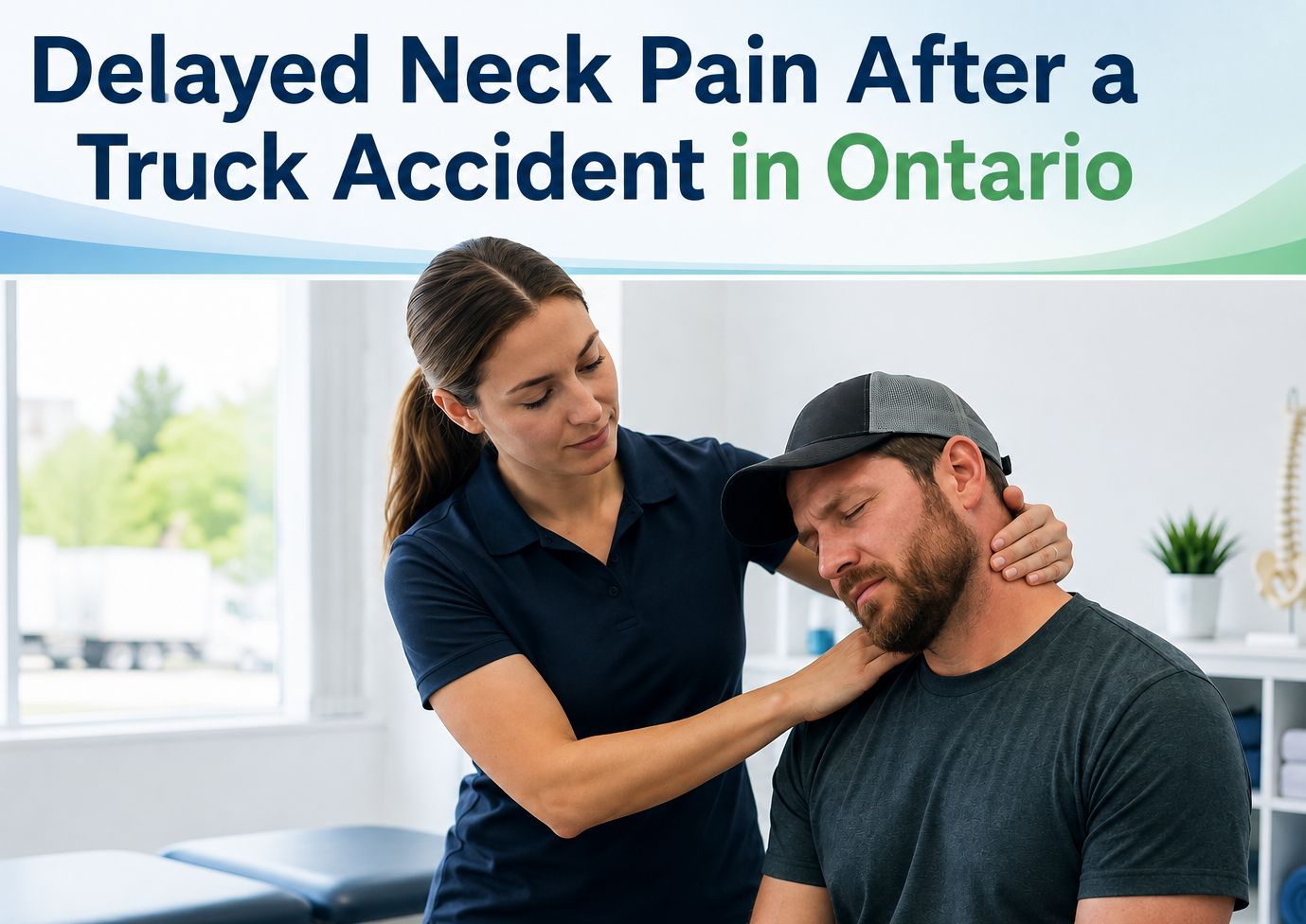
alt="Female physiotherapist assessing delayed neck pain in a truck driver after an Ontario accident"
loading="eager"
decoding="async"
>
Quick answer
Yes—delayed neck pain may still be assessed and treated even when symptoms appear weeks after a truck accident. Soft-tissue injuries such as whiplash can become more noticeable over time. If the symptoms are related to the collision, approved rehabilitation may be available through Ontario Accident Benefits, depending on eligibility, clinical findings, available limits and insurer approval.
Key takeaways
On this page
Why symptoms may appear later
Common delayed symptoms
Assessment and treatment
Why truck drivers are different
Ontario Accident Benefits
What to do now
When to seek urgent care
Frequently asked questions
Many truck drivers continue working during the first days after a collision because the pain appears mild or manageable. Stress hormones released during and immediately after an accident may temporarily reduce pain awareness. Inflammation, muscle guarding and irritation of the joints and soft tissues can then become more noticeable over the following days or weeks.
Returning to prolonged driving, repeated mirror checks, loading tasks and sleeping in the cab may also aggravate an injury that initially seemed minor. This is why delayed neck pain after a truck accident in Ontario should be professionally assessed rather than ignored.

Reduced movement or pain when turning the head, especially for mirror and blind-spot checks.

Headaches may begin at the base of the skull and worsen with neck movement or prolonged sitting.

Tightness or aching may spread into the shoulders, upper back or shoulder blades.

Radiating symptoms into the arm or hand should be assessed promptly.

Pain may interfere with finding a comfortable sleeping position or staying asleep.

Neck pain may reduce comfort, concentration and safe head movement during driving.
A comprehensive evaluation typically reviews the accident, the timing of symptoms, current limitations and work demands. The healthcare provider may assess neck movement, strength, posture, shoulder function, neurological symptoms and activities relevant to commercial driving.
May include movement assessment, exercise rehabilitation, mobility work, education and gradual functional progression.
May be considered for appropriate mechanical neck, back and joint concerns after assessment.
May be included for muscle tension and soft-tissue symptoms when clinically appropriate and approved.
May address prolonged sitting, mirror checks, lifting, climbing and return-to-driving tolerance.
Important: Treatment should be based on clinical findings and should not begin with an expectation of insurer payment until the claim and approval process have been confirmed.
Truck driving places unique demands on the neck and upper body. Long hours of sitting, whole-body vibration, repetitive mirror checks, steering, climbing into the cab, coupling trailers and handling cargo can aggravate neck symptoms. A rehabilitation program should therefore consider both pain and the driver's ability to perform essential duties safely.
Ontario automobile insurance provides Statutory Accident Benefits for eligible people injured in motor vehicle accidents. Approved medical and rehabilitation services may be available regardless of fault, but coverage depends on the accident date, policy, clinical evidence, available limits and insurer decision.
If the driver was operating a company truck, the employer or fleet manager should be asked which insurer is handling the collision, whether an Accident Benefits file has been opened, and who the assigned adjuster is.
Will treatment be completely free? Approved treatment may be paid through available Accident Benefits and could reduce or eliminate direct out-of-pocket costs. This is not guaranteed. The clinic and driver should confirm approval and any possible patient responsibility before treatment begins.
Seek medical attentionArrange assessment for persistent, worsening or newly appearing symptoms.
Notify the insurerReport that symptoms appeared or continued after the collision.
Collect recordsKeep emergency notes, physician records, imaging, incident reports and receipts.
Explain work limitationsDescribe problems with driving, mirror checks, lifting, climbing or sleeping.
Book rehabilitation assessmentObtain a clinical evaluation and treatment recommendation.
Confirm approvalVerify the claim number, adjuster and treatment funding before billing the insurer.
New or worsening weakness
Severe or worsening headache
Loss of consciousness or confusion
Difficulty speaking, swallowing or walking
Progressive numbness or loss of coordination
Chest pain or breathing difficulty
Can delayed neck pain still be related to the accident?
Yes. Symptoms may appear gradually. A healthcare provider can assess the timing, clinical findings and functional effects to determine whether the presentation is consistent with the collision.Can I start physiotherapy two months after the accident?
Possibly. A delay does not automatically prevent treatment. The insurer will decide whether the proposed treatment is eligible and approved.What if I did not go to the hospital immediately?
You can still seek assessment. Earlier records are helpful, but later clinical documentation may also support the history of delayed symptoms.Will I have to pay for treatment myself?
If the treatment plan is approved and benefits are available, the insurer may pay the clinic directly. Confirm the billing process and any patient responsibility before treatment begins.Can I continue driving while receiving treatment?
Some drivers continue regular or modified duties. This depends on symptoms, medication effects, range of motion, concentration and the physical demands of the job.Do I need a doctor's referral?
Many rehabilitation providers accept patients without a referral, although an insurer may request medical records or supporting information.What if I was driving a company truck?
Ask the employer or fleet manager which insurer handles the vehicle, whether an Accident Benefits claim has been opened and who the adjuster is.
Related resources
Learn about treatment, Accident Benefits, delayed injuries and return to work.
Understand common symptoms, assessment and rehabilitation options.
Learn how rehabilitation may support safe work progression.
Clinical review
Reviewed by:
Last reviewed:
For stronger E-E-A-T, replace the generic reviewer with the name and Ontario credentials of the clinician who reviews and approves this article.
· Brampton
Our team can assess your symptoms, explain the rehabilitation process and prepare appropriate clinical documentation. Insurance approval and coverage remain claim-specific.
Book an Assessment
Call (905)793-9993
Medical and insurance disclaimer: This page provides general educational information and is not medical, legal or insurance advice. Eligibility, benefit limits, treatment approval and payment depend on the accident date, policy, clinical evidence, insurer decisions and applicable Ontario rules. Seek urgent medical care for serious or worsening symptoms.