


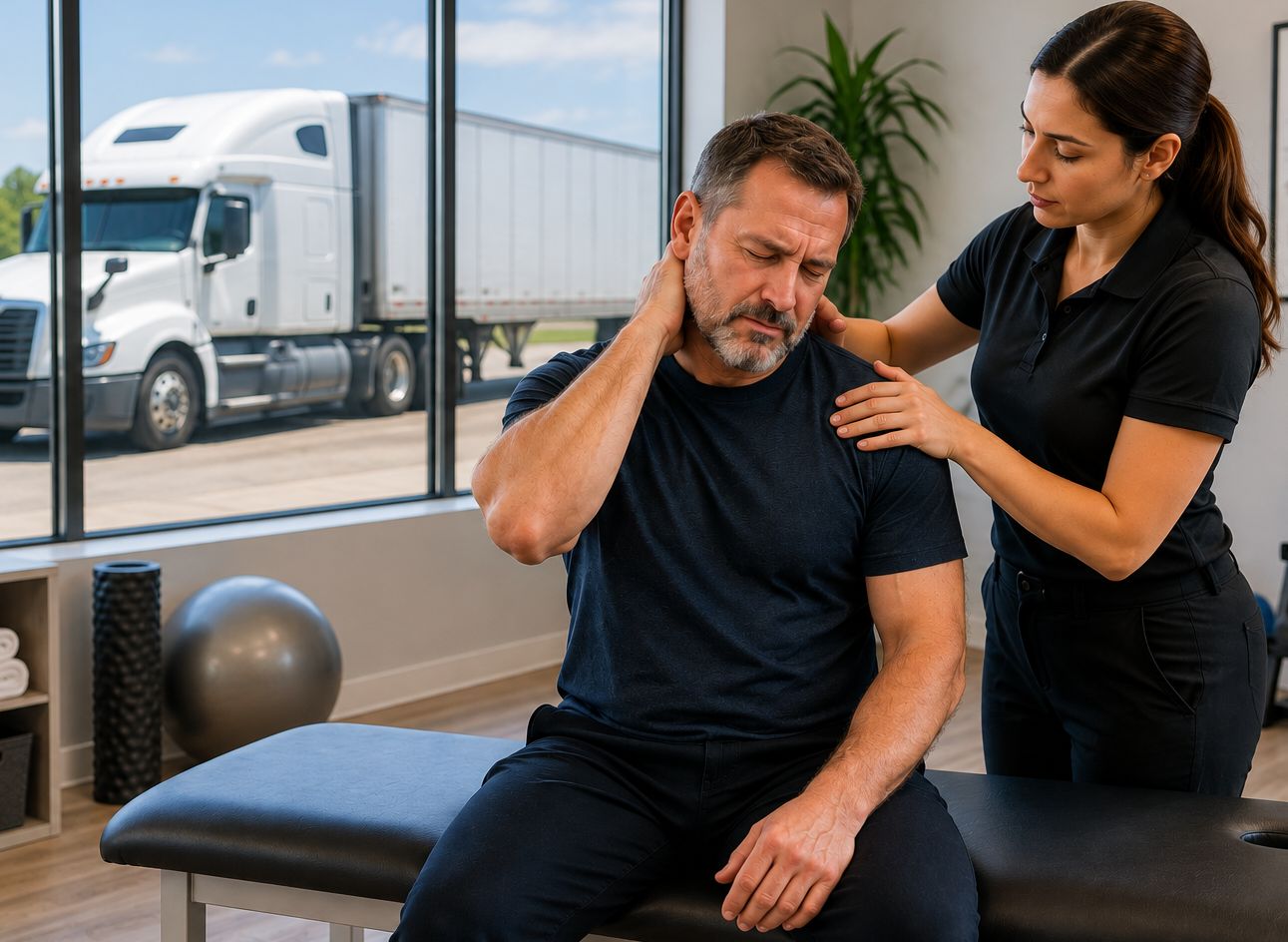
Can I Start Treatment Two Months After a Truck Accident?
Possibly, yes. Some truck drivers initially continue working because the pain seems manageable, they expect it to improve, or they are unsure how commercial vehicle insurance applies to their injuries. Symptoms can later become more noticeable during long drives, repeated mirror checks, climbing into the cab, loading, unloading or sleeping in the truck.
A delay does not automatically mean the injury is unrelated or that treatment cannot be considered. However, the longer the delay, the more important it becomes to clearly document when symptoms began, how they progressed and how they affect work and daily activities.
Common Symptoms After a Commercial Truck Accident
Truck accidents may cause musculoskeletal injuries, whiplash symptoms and functional limitations. Common concerns include:
| Possible problem | Common symptoms | How it may affect driving |
|---|---|---|
| Whiplash or neck strain | Neck pain, stiffness, headaches | Difficulty checking mirrors or blind spots |
| Lower-back strain | Back pain, stiffness, reduced sitting tolerance | Pain during long-haul driving or cab vibration |
| Shoulder injury | Pain reaching, lifting or steering | Difficulty controlling the wheel or handling cargo |
| Nerve irritation | Tingling, numbness or radiating pain | Reduced comfort, strength or concentration |
| Post-concussion symptoms | Headache, dizziness, light sensitivity | May affect safe driving and attention |
Seek urgent medical care for red-flag symptoms
What Should an Injured Truck Driver Do Now?
What May Ontario Accident Benefits Cover?
Ontario automobile insurance includes Statutory Accident Benefits for eligible people injured in motor vehicle accidents. Depending on the accident date, injury classification, policy and insurer decision, approved medical and rehabilitation services may include:
What If I Was Driving a Company Truck?
A commercial policy may protect several different interests: the truck, the cargo, third parties and eligible people injured in the collision. Cargo coverage and physical-damage coverage do not replace the Accident Benefits process for personal injuries.
Ask the company or fleet manager:
Being an employee driver does not mean you should assume every treatment is automatically covered. Confirm the claim details directly with the insurer.
How Truck Accident Rehabilitation in Ontario May Help
A rehabilitation program should be based on the driver's injuries, functional limitations, work demands and recovery goals. Treatment may include therapeutic exercise, mobility work, strengthening, manual therapy, posture and movement education, pacing strategies and a home exercise program.
For a truck driver, the assessment may also consider:
- Prolonged sitting and vibration tolerance
- Neck rotation for mirror and blind-spot checks
- Climbing into and out of the cab
- Coupling and uncoupling trailers
- Handling straps, doors, dollies and cargo
- Lifting, pulling, pushing and emergency movements
Returning to Truck Driving Safely
Returning to work is not only about pain level. The driver must be able to perform essential tasks safely and consistently. Some people may return to regular duties, while others may benefit from temporary restrictions, modified duties or a gradual increase in driving time.
A return-to-work plan may address sitting tolerance, neck mobility, lifting capacity, fatigue, medication effects and the ability to react safely during unexpected road situations. Recommendations should come from the appropriate treating professionals and should reflect the actual demands of the job.
Frequently Asked Questions
Can I receive physiotherapy two months after a truck accident?
Possibly. A delay does not automatically prevent treatment. A healthcare professional can assess your symptoms, and the insurer will determine whether the proposed treatment is eligible and approved.
Do I need a doctor's referral?
Many rehabilitation providers accept patients without a physician referral. However, the insurer may request medical information or supporting documentation depending on the claim.
What if my neck or back pain started weeks later?
Delayed or gradually worsening symptoms should be professionally assessed. Explain when the symptoms began and how they changed after the accident.
Can I choose my own rehabilitation clinic?
Patients can often choose a regulated healthcare provider, but claim-specific requirements should be confirmed with the insurer.
What if I was responsible for the accident?
Ontario Accident Benefits may be available regardless of fault, subject to eligibility and applicable insurance rules.
Can I continue working during rehabilitation?
Some drivers continue regular or modified duties. The safest approach depends on symptoms, medication, job demands and clinical findings.
What happens if the insurer does not approve treatment?
Ask the insurer for the reason in writing and discuss the decision with your healthcare provider. Legal advice may be appropriate when there is a dispute about benefits.